After Virginia Special Election, The Gerrymandering War Escalates Again
Virginia held a special election Tuesday on a referendum aimed at giving Democrats more seats in the US House. It was a close race, with “Yes” in favor of a legislative-drawn congressional map passing by a narrow 51.5% to 48.5%.

Virginia held a special election Tuesday on a referendum aimed at giving Democrats more seats in the US House. It was a close race, with “Yes” in favor of a legislative-drawn congressional map passing by a narrow 51.5% to 48.5%.
As a result, the Commonwealth will suspend a congressional map drawn by the voter-approved Virginia Redistricting Commission and use a new map that could give Democrats as much as a 10-1 advantage in House elections.
Supporters of the referendum celebrated, calling out Republicans for starting the ongoing redistricting arms race. Virginia President Pro Tempore L. Louise Lucas said, “Y’all started it and we f***ing finished it.”
Those who favored the referendum also argued that the change is temporary and unlike the “other side,” they allowed this to go before voters.
Many Republicans asserted that the referendum was a “power grab.” Trump called it “terrible” and said, “nobody’s ever seen anything like it.” He also added that “it’s unfair,” and held a telerally call Monday to encourage attendees to vote against the referendum.
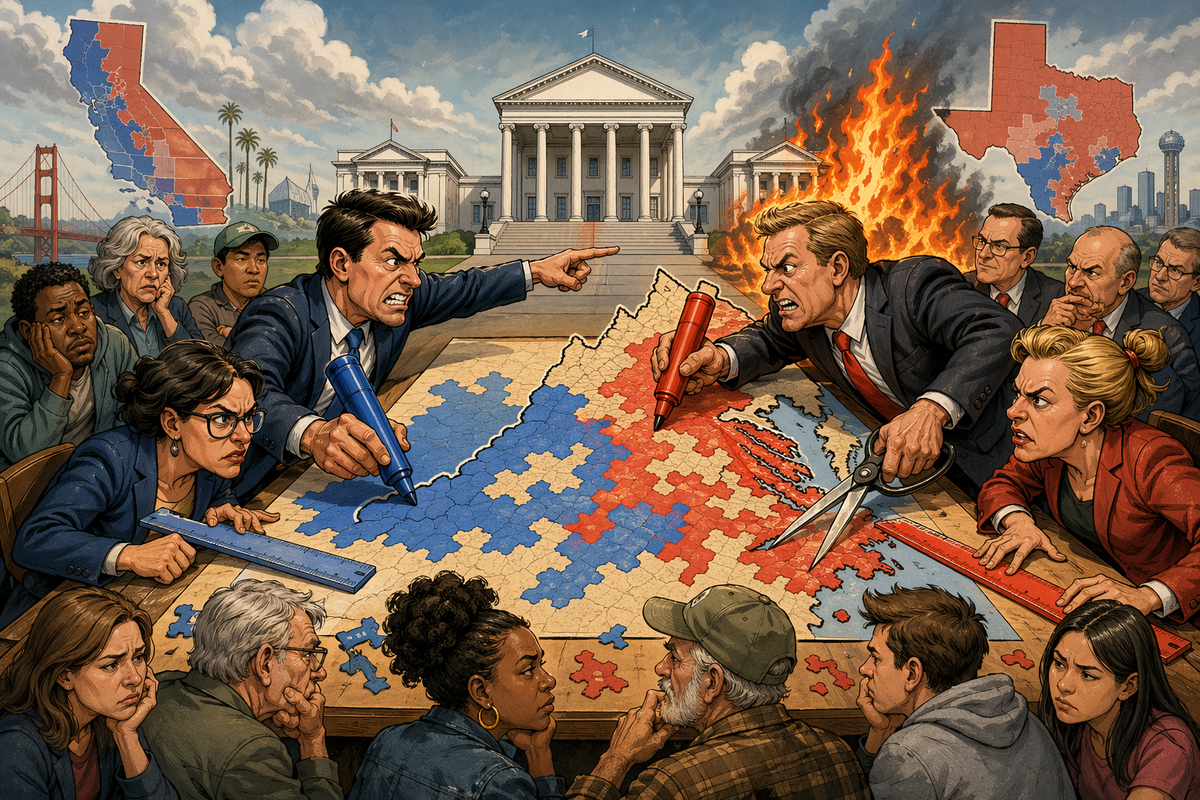
To recap: One side says this is about “fighting fire with fire” and “leveling the playing field.” The other says their opponents are trying to “rig elections” Both sides point the finger at the other and yell, “They started it!”
When the IVN audience was asked about Tuesday’s vote, their responses were mixed. For example, Christopher Hack wrote, “An attack on democracy is an attack on democracy, whether conducted in the legislature or the ballot box.”
“Virginia has followed the terrible example of both Texas and California, choosing partisan political gamesmanship over democracy. Shame on all of them!”
But other readers argued that at least this was put to a vote.
“This is a temporary, voter approved measure to counteract the extreme gerrymandering done by the GOP,” said Leanne Harrington.
“GOP was done without any voter approval or temporary timeline; just foisted on citizens by state legislatures. GOP has consistently fought independent commission redistricting at every step: see Utah as [a] recent example.”
She added, “Don't ‘both sides’ this; they're not the same.”
Here Are The Facts
Supporters of the Virginia referendum are correct. The current gerrymandering fight between the Republican and Democratic Parties started when President Trump called on Republicans in Texas, Missouri, and other states to redraw their congressional maps.
 Shawn Griffiths
Texas complied, California quickly countered, and then Missouri, North Carolina, and Ohio followed. There were efforts in states like Indiana and Maryland, but they were defeated in the legislature.
Now, Virginia has been added to the list and Florida will hold a special session next week. Colorado Democrats are also trying to put a measure on the ballot that would circumvent the independent redistricting commission there.
Both parties have a long history of benefiting from gerrymandering. Democratic-controlled states like Illinois and New Mexico fail the partisan redistricting test as much as Texas and Florida.
Shawn Griffiths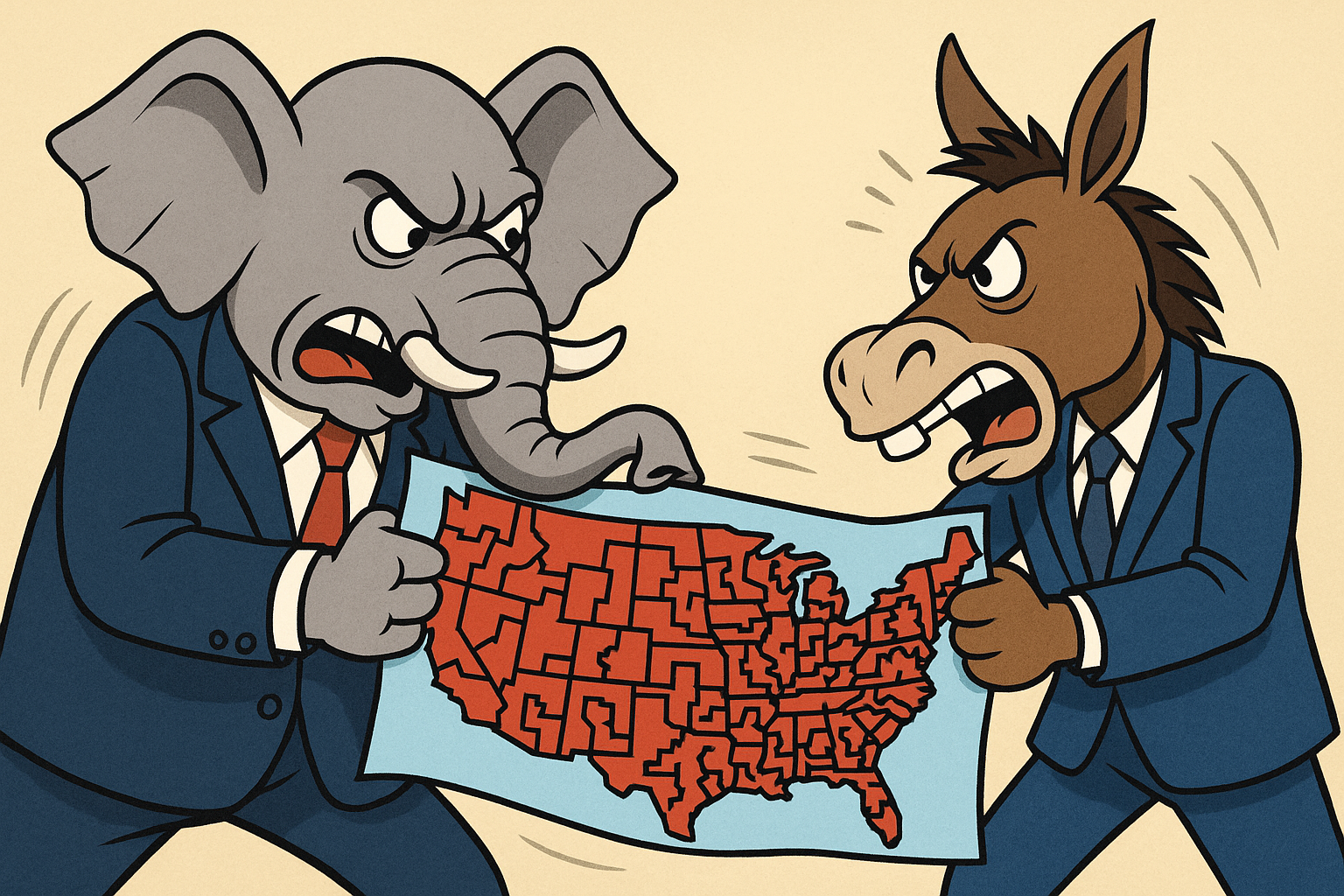
It is true that the Virginia referendum was put before voters while redistricting in Texas, Missouri, and North Carolina were done in the legislature without voter consent. However, there is more to this story.
The narrative that Virginia Democrats have pushed makes it sound like they deliberately chose to make the new map temporary and chose to put it on the ballot in the spirit of democracy.
In reality, they had no other choice if they wanted to change the state’s congressional map.
Much like Prop 50 in California, the Virginia Constitution does not allow the legislature to redraw congressional and state legislative districts. This is because these maps are drawn by a redistricting commission that is enshrined into law.
The only way for the legislature to get around that is to hold an election. It is also the reason why the new map is temporary. It has to be or else it would violate the Virginia Constitution.
Under Article II, Section 6-A of the state constitution, the Virginia Redistricting Commission convenes every 10 years to redraw the Commonwealth’s congressional and state legislative districts. It consists of 16 members – 8 legislators and 8 citizens.
Proposed maps are sent to the General Assembly for a straight up-or-down vote. No amendments are allowed. The commission was added to the constitution after voters approved Question 1 in 2020 with 66% of the vote.
Voters did have the final say in Virginia, and the results show a divided electorate on the matter.
They were inundated with TV ads, mailers, and campaign messaging from both sides paid for with money that will never have to be disclosed. Nearly $100 million went into the race, and it was mostly from “dark money.”
Voters did not get a complete picture of who was trying to influence this race or from where since congressional redistricting has now become a national fight as opposed to a state-by-state process.
How Republican-controlled states redraw their maps now affects how Democrat-controlled states redraw theirs and vice versa. And then both sides will turn around and say they have to stop the “other side” from rigging the process.
Even when one side says, "this is temporary," voters are justified in asking: What happens when escalation continues? What happens when more states join in or decide they need to go further?
At the end of the day, what voters hear from Republicans and Democrats who support these redistricting efforts is not about representation. It is not about being fair to voters. It is about who controls of Congress.