Are California's Cannabis Raids Starting to Work?
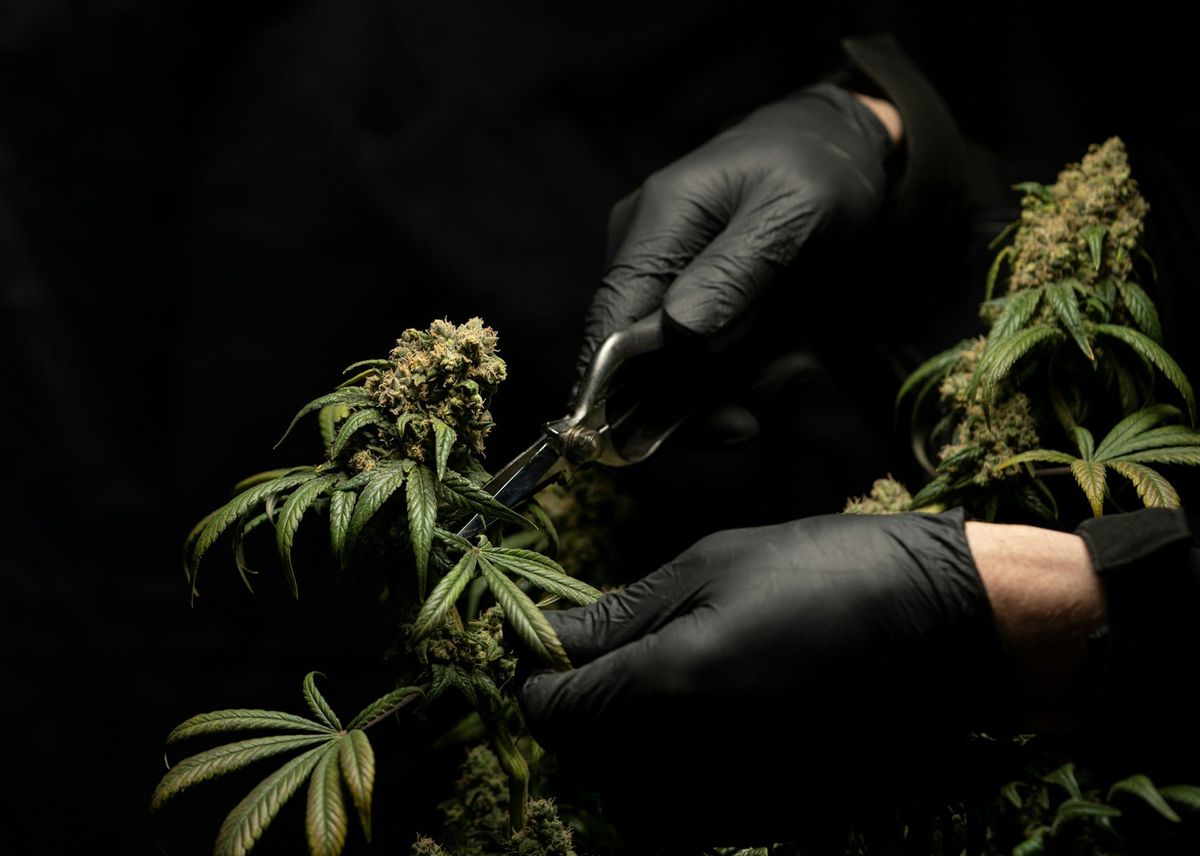
California has seized more than $1.2 billion in illegal cannabis since 2022. But whether those numbers are moving the needle on the state's entrenched illicit market is another matter.

California has seized more than $1.2 billion in illegal cannabis since 2022. But whether those numbers are moving the needle on the state's entrenched illicit market is another matter.
The Unified Cannabis Enforcement Task Force, which Gov. Gavin Newsom created in 2022 to coordinate state, local, and federal agencies, has destroyed more than 757,000 pounds of illegal cannabis across 36 counties. Seizures grew dramatically through the program's early years, with 2025 totals reaching $609 million, an 18-fold increase over the task force's first year, according to the governor's office.
Between July and September 2025, UCETF ran 17 joint operations across 15 counties, eradicating more than 234,000 plants and seizing over $222 million in illegal products. A single operation in Monterey County accounted for more than $125 million of that total, making it one of the largest illegal cannabis enforcement actions in state history.
Separate operations in Oakland and Hayward added nearly $20 million more.
The task force, co-chaired by the Department of Cannabis Control and the California Department of Fish and Wildlife, has drawn on more than 60 partner agencies. Investigators routinely uncover violations well beyond cannabis itself, including the use of banned pesticides, wage theft, labor trafficking and damage to waterways and wildlife habitat.
"They do not just break the law, they put our neighborhoods, environment, and licensed cannabis businesses at risk," DCC Director Nicole Elliott said following the third-quarter results.
Federal Agents Hit Dispensaries From L.A. to San Diego
There has been a focus on illegal retail sales and products reaching minors in California.
In mid-March, DEA agents from the agency's Los Angeles Field Division Special Response Team served search warrants at a business on Tennessee Avenue in West Los Angeles, near the 405 Freeway. According to a statement from DEA Public Affairs Specialist Rosa Valle-Lopez, the operation was conducted in partnership with the Torrance Police Department as part of an ongoing investigation. Neighbors described an unusually large law enforcement presence, with vehicles blocking the surrounding streets and a helicopter overhead as LAPD officers, who were dispatched around 8:15 a.m., assisted federal agents on scene.
The operation yielded roughly $300,000 in cash, and state cannabis regulators placed an embargo on all marijuana and vape products at the location, immediately halting their sale pending the outcome of the investigation.
Days earlier, Bakersfield became the focus of a joint operation targeting dispensaries suspected of selling THC products to minors. The DEA dubbed it the "Vape Surge Operation," and it came after local residents filed a wave of complaints about teenagers obtaining illegal THC vape pens. Working alongside Bakersfield police narcotics detectives and California Highway Patrol officers on DEA assignment, agents served warrants at three locations on Niles Street, Golden State Avenue and East California Avenue, each situated near schools, parks or daycare facilities.
The seizures included more than 35 pounds of processed marijuana, nearly 200 THC vape pens, hundreds of THC edibles, THC wax, psilocybin-infused edibles and just over $1,100 in cash.
A day later in Oceanside, a sweep of four smoke shops by a multi-agency coalition that included local police, the San Diego County Sheriff's Office, the Naval Criminal Investigative Service, and the DEA turned up more than 100 pounds of merchandise suspected of containing controlled substances.
Investigators found products believed to contain kratom, psilocybin, and THC being sold outside any regulatory framework.
Four suspects were identified by Oceanside police spokesperson Gina Avalos and face state fines and other penalties.
The DEA's top agent in the region drew a direct line between the operations and the risk to young people.
"Oftentimes, youth don't know what is hiding in these devices,” Special Agent in Charge James Nunnallee said.
Importantly, the recent federal drug enforcement activity appears to be targeting operators accused of criminal activity beyond participation in California’s legal cannabis industry alone.
Unlike what recent coverage from CalMatters to the AP have suggested, federal authorities do not appear to be targeting otherwise legal cannabis operators. Operators who have been targeted by the federal government are accused of underlying criminal allegations, including child-labor violations, gray and black interstate commerce activity, and political corruption.
'The Black Market is Very Pervasive'
The enforcement push reflects growing alarm over what one California regulator described as a market in which unregulated products have become "simply another incarnation of the illicit market," one that needs to be stopped before more people are harmed.
“The black market is very pervasive, and it is definitely larger than the legal market,” said Bill Jones, head of enforcement for California’s Department of Cannabis Control.
Young people are consuming products with no testing requirements and no dosage limits. State and local governments are forfeiting tax revenue that legal operators pay and illegal ones do not. And licensed cannabis businesses in California, which operate under some of the most stringent regulations in the country, face competition from sellers who bear none of those costs.
California's legal cannabis market has struggled under that pressure for years, weighed down by high tax rates, complex licensing requirements, and an illicit sector that has proven difficult to uproot.
Whether sustained enforcement can ultimately shift the balance toward a well-functioning legal market remains to be seen.
According to the California Cannabis Market Outlook 2024 Report, prepared by ERA Economics, LLC for the Department of Cannabis Control, January 2025:
“The most effective ways to eliminate the illicit market include: (i) decreasing costs for licensed businesses, (ii) increasing costs for illicit cannabis (e.g., more enforcement makes it riskier/most costly to provide illicit cannabis), and growing consumer demand for licensed cannabis.”
“Increasing efforts by both the [Department of Cannabis Control] as well as other state agencies, federal and local authorities, help put pressure on eliminating the illicit market production,” ERA Economics Principal Economist Duncan MacEwan told the Cannabis Business Times. “Anything that increases the cost of producing in the illicit market is good in that it pushes folks towards the licensed market.”